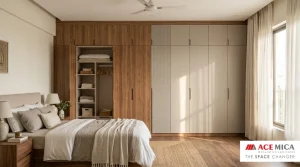
Of all the furniture in a home, the wardrobe is the piece that takes the most physical punishment. You open it in the morning when you are half awake, close it when you are in a hurry, handle the shutters with wet hands, drag clothes against the interior panels, and run your keys along the edge without noticing. The laminate sheet for wardrobe surfaces needs to handle all of this without showing it.
That is the real specification challenge with wardrobe laminates. It is not about picking a colour from a board. It is about understanding what the surface will face every day and choosing a material that performs at that level while still looking the way you intended. Ace Mica’s manufacturing process and material specifications are built around this kind of real-world performance requirement.
What Actually Matters in a Wardrobe Laminate
There are four performance factors that genuinely determine how a wardrobe laminate holds up over time. Surface hardness is the first: a softer surface will show scratches from belt buckles, jewellery, and even fingernails within the first year. Edge quality is the second: the cut edge of a laminate at a hinge point or handle recess is where delamination starts if the material is too thin or the bonding is inconsistent. Moisture resistance is the third, particularly relevant in Indian homes where bathroom adjacency and monsoon humidity are real variables. And colour fastness is the fourth: a laminate that fades under UV exposure from windows is a much more significant problem on a wardrobe that you look at every day.
Ace Mica laminates meet IS:2046 standard requirements across all four factors. The 1mm specification across the wardrobe shutter range is not incidental. It exists because of what that extra material does at the edges and stress points of a door that opens and closes thousands of times a year.
Finish Options for Wardrobe Shutters in 2026
Matte Wood Grain — The Default Choice
Matte wood grain is where the majority of wardrobe laminate specifications land, and with good reason. The texture of a wood grain surface naturally disperses contact marks and the minor surface incidents of daily use. The grain itself creates visual movement that makes any small imperfections invisible at normal viewing distance. In 2026, the dominant wood grain choices for wardrobes in India have moved toward lighter, cooler oak and ash tones rather than the heavier teaks and walnuts that were standard a decade ago. Ace Mica’s Sabah Oak, Nordic Wood, Crossfire Oak, and Lucent Elm cover this direction well. For a deeper look at the full wood grain range, see our guide to wood finish laminate sheets for warm interiors.
Matte Solid Colour — For Minimal Interiors
Solid colour matte laminates give wardrobe shutters a clean, flat quality that suits contemporary minimalist interiors. The finish reads as considered rather than accidental, and it pairs well with flush handle profiles and integrated lighting that are common in current wardrobe design. The practical advantage over gloss in a solid colour is the same as with wood grain: fingerprints and contact marks are far less visible on a matte surface. Ace Mica’s Solid decor range covers both warm and cool palettes with consistent surface quality.
High Gloss Solid — For Luxury Accent Applications
High gloss solid laminates on wardrobe shutters are a deliberate design choice, not a default. The reflective surface amplifies light and gives the bedroom a premium, finished quality that is particularly effective in larger rooms with good natural light. The trade-off is maintenance: gloss surfaces show every fingerprint and need regular wiping to look the way they are intended. For a full comparison of where gloss performs best against matte, see our post on High Gloss vs Matte Laminates in India. The most effective approach is to use gloss on one or two central shutters as an accent, against a matte background on the surrounding panels.
Fluted and Textured Panels — The 2026 Design Statement
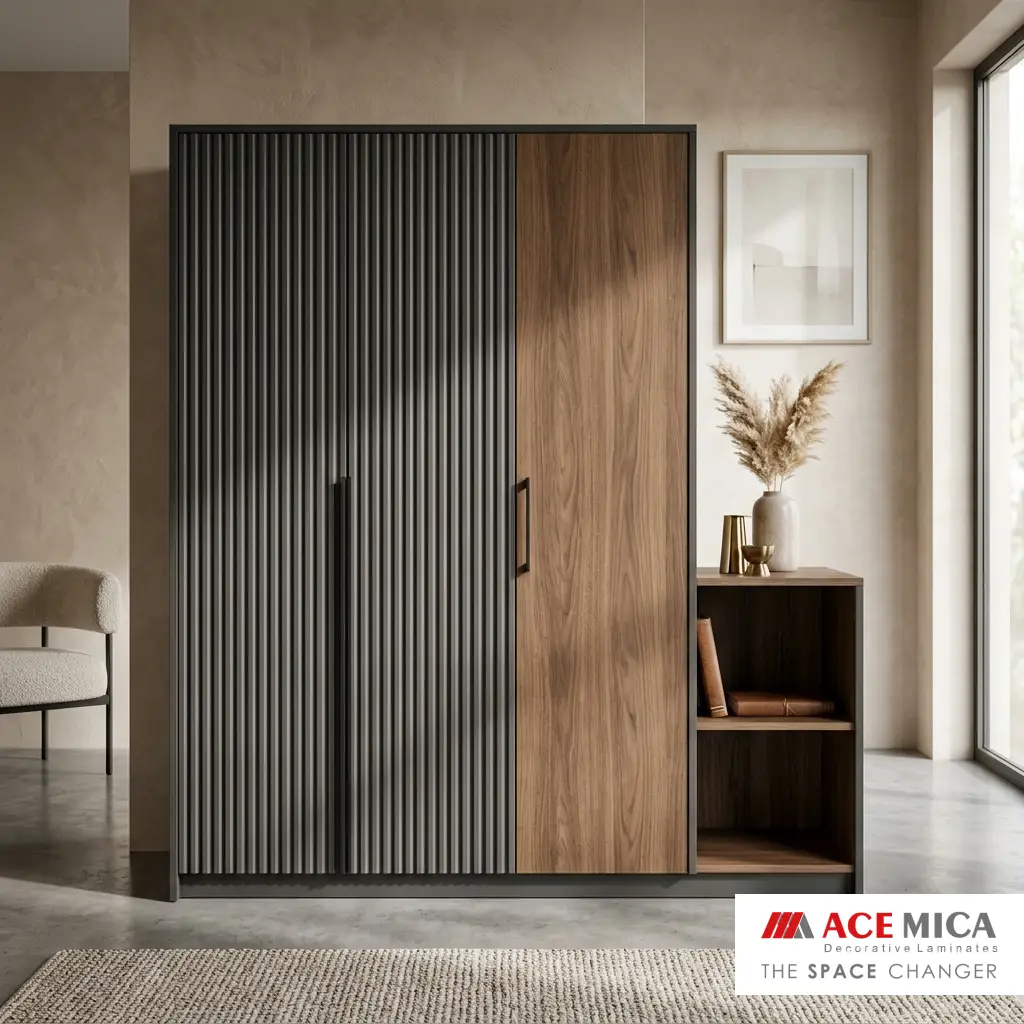
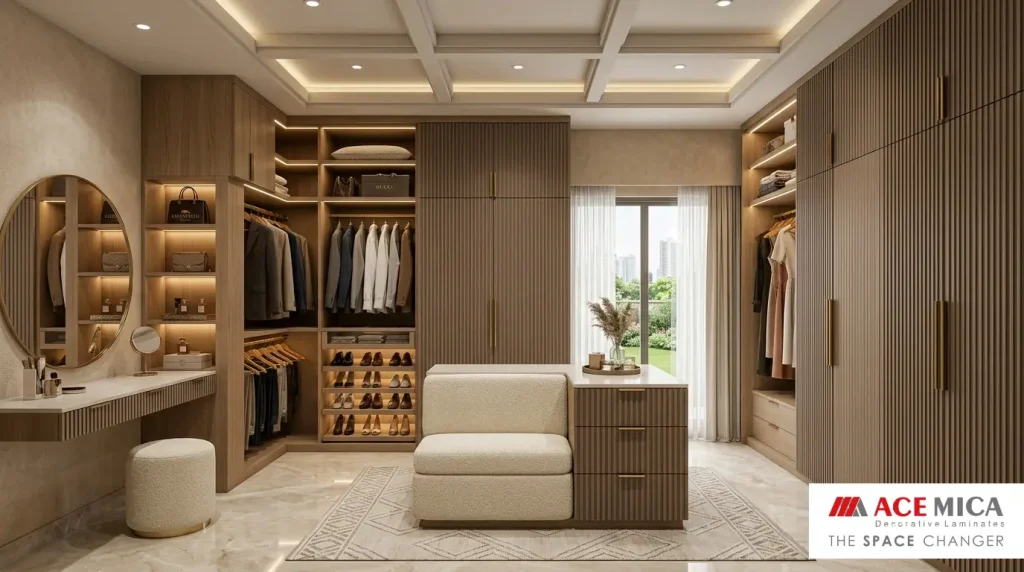
Fluted laminates on wardrobe shutters have moved from a niche design choice to a mainstream specification across urban Indian projects in 2026. The vertical ribbed texture gives furniture a joinery-quality depth that reads as expensive and custom-designed. Applied on the central shutters of a sliding wardrobe with matte solid panels on either side, a fluted finish creates a wardrobe that looks like it belongs in a designed bedroom rather than a showroom floor. Ace Mica’s Fluted decor category covers the standard vertical rib profiles most commonly specified.
Finish Performance at a Glance
| Finish Type | Fingerprint Visibility | Best Application | Maintenance Level |
|---|---|---|---|
| Matte Wood Grain | Very Low | All wardrobe shutters, daily-use bedrooms | Dry wipe as needed |
| Matte Solid Colour | Low | Contemporary and minimal wardrobes | Dry wipe as needed |
| High Gloss Solid | High | Luxury accent panels, larger bedrooms | Regular damp wipe required |
| Fluted or Textured | Low to Medium | Statement shutters, designer projects | Dry wipe, avoid abrasive cloths |
| Abstract Patterned | Low | Feature panels, maximalist design | Dry wipe as needed |
Planning a Mixed Finish Wardrobe
The design approach that produces the best-looking wardrobes in 2026 is a deliberate combination of finishes rather than a single material across all shutters. The practical framework is to use a primary finish for 65 to 70 percent of the shutter area and an accent finish for the remainder. This creates visual depth and a sense of considered design without making the surface feel busy or inconsistent.
A common combination is matte oak for the wardrobe frame and fixed structural panels, with solid colour matte shutters as the main closing surface. Another direction is using a fluted finish on the central two shutters of a four-door wardrobe, with matte wood grain on the outer two. The key is that the two finishes should share a tone. A warm wood grain paired with a warm ivory solid works. A cool ash oak paired with a warm terracotta solid does not.
Ace Mica’s design team can advise on finish combination compatibility for specific wardrobe layouts. Contact the team via the Contact page at acemica.com or visit the Wood, Solid, and Fluted decor galleries to identify finish pairings that work.
Frequently Asked Questions
Q1. What laminate thickness is best for wardrobe shutters?
1mm is the recommended thickness for wardrobe shutters. The additional material at edges holds up better around hinge screws and handle fixings, which are the highest-stress points on any wardrobe door.
Q2. Can I mix two different laminate finishes on the same wardrobe?
Yes, and it is a common design approach in 2026. A typical combination is a matte wood grain finish on the frame and fixed panels, with a solid colour or fluted finish on the main shutters. This creates visual interest without the surface looking fragmented.
Q3. Is matte or gloss laminate better for wardrobe shutters?
Matte is the more practical choice for wardrobes that are used daily. It shows fingerprints and contact marks far less than gloss. High gloss finishes are best reserved for accent panels or luxury bedrooms where the maintenance overhead is acceptable for the visual effect.
Q4. Do Ace Mica laminates work on sliding wardrobe shutters?
Yes. Ace Mica laminates bond effectively to both hinged and sliding shutter substrates, including plywood, MDF, and HDF panels used in modular wardrobe systems.
Q5. Which Ace Mica decor range is best for wardrobe laminates?
The Wood and Solid decor ranges are the primary choice for wardrobe applications. The Fluted range is increasingly specified for accent shutter panels in contemporary bedroom designs. All three are available in the design gallery at acemica.com.
Browse the full Ace Mica wardrobe laminate range at acemica.com across the Wood, Solid, Fluted, and Abstract decor categories. Download the catalogue or reach the team directly through the Contact page for project-specific guidance.