Choosing between a high gloss and a matte laminate comes down to how you want the surface to look, how much cleaning you are willing to do, and where the panel will sit in your home. High gloss laminates reflect light and make a space feel larger and more premium, while matte laminates hide fingerprints and scratches and suit high traffic areas. This guide breaks down both finishes across the factors that actually matter so you can decide with confidence.
Most homeowners default to whichever finish looks best in a showroom sample, without weighing how that same panel will behave after eighteen months of daily use. A showroom is controlled, evenly lit and freshly cleaned, which flatters gloss surfaces in particular. Understanding how each finish performs under real household conditions, not showroom conditions, is what actually determines satisfaction a year or two down the line.
What Is the Difference Between High Gloss and Matte Laminates
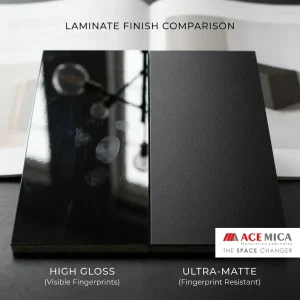
The core difference is surface reflectivity. A high gloss laminate has a smooth, mirror like top layer that bounces light back at you, giving a bright and luxurious feel. A matte laminate has a flat, non reflective surface that softens light and reads as understated and natural.
Beyond appearance, the two finishes behave differently in daily use. Gloss surfaces show smudges, dust and fine scratches more readily because light exposes every mark. Matte surfaces disguise these imperfections, which is why designers often specify matte for kitchens and family rooms where hands touch the panels constantly.
It helps to picture the two side by side. Run your hand across a high gloss panel and it feels slick and cool, almost like glass, with a clear reflection of whatever sits opposite it. A matte panel feels drier and slightly warmer to the touch, and instead of a mirror image you see a soft, even spread of light across the surface.
Neither finish is objectively better than the other. They solve different problems. Gloss is about drama, light and a sense of luxury, while matte is about calm, texture and everyday practicality. Once you understand what each finish is designed to do, the choice for any given surface becomes much clearer.
Which Finish Looks Better in a Modern Home
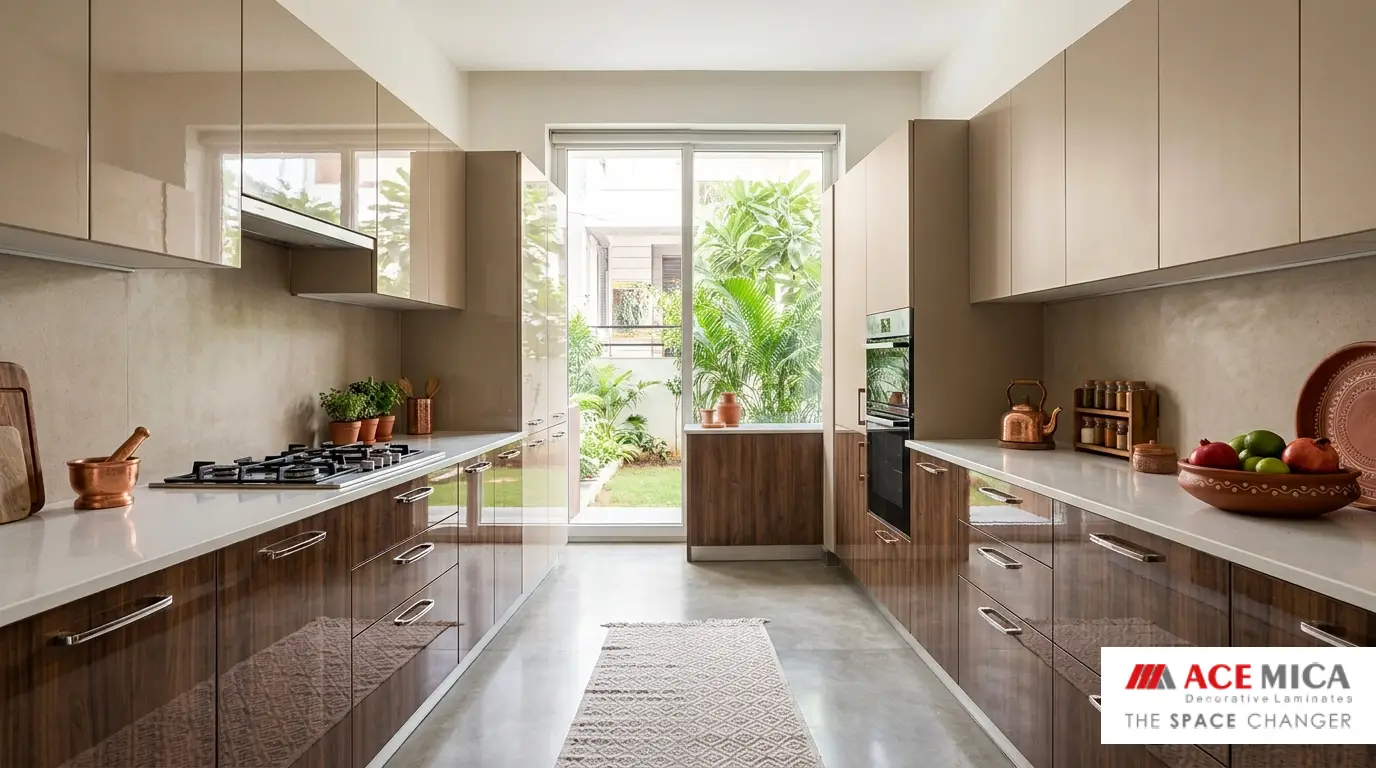
Both finishes look modern when applied to the right space. High gloss laminates work best in compact rooms, wardrobes and kitchen shutters where the reflection adds depth and a sense of openness. The finish pairs well with contemporary handleless cabinetry and minimalist interiors.
Matte laminates suit larger rooms, feature walls and furniture where you want a calm, textured look. Matte finishes have grown sharply in popularity across Indian homes since 2024 because they photograph well, resist visible wear, and complement the warm wood and stone tones that dominate current interior trends.
Colour behaves differently on each finish as well. On a high gloss surface, dark and bold colours look deeper and more saturated because the reflection intensifies them, which is why gloss works so well for statement blacks, deep blues and rich reds. On a matte surface those same colours read as softer and more muted, giving a grounded, contemporary feel that sits comfortably in a living space.
Wood tones are worth a special mention. A matte woodgrain reads as natural and authentic, close to real timber, while a gloss woodgrain looks more stylised and modern. If your goal is a warm, organic room, matte usually wins. If you want a sleek, showpiece feel, gloss delivers it.
How Do the Two Finishes Compare on Maintenance
Matte laminates are the lower maintenance option. Their non reflective surface hides fingerprints, water spots and light scratches, so they look clean with far less effort. A weekly wipe with a soft damp cloth is usually enough.
High gloss laminates demand more care to stay looking their best. Because the surface reflects light, every fingerprint and dust particle is visible, and they need frequent wiping with a microfibre cloth. Acemica recommends gloss finishes for lower touch zones such as wardrobe fronts and upper cabinets rather than heavily used worktops.
Water and steam are the other consideration in maintenance. In kitchens and near sinks, gloss surfaces show water spots quickly and need drying to stay spotless, whereas matte surfaces disguise the same droplets until you get around to wiping them. For busy family kitchens, this alone often tips the decision toward matte on the heavily used surfaces.
A practical tip we give clients is to think in zones rather than picking one finish for the whole room. Reserve gloss for the surfaces you look at but rarely touch, and put matte everywhere hands land repeatedly. This zoning approach gives you the visual lift of gloss without signing up for constant cleaning.
Which Finish Is More Durable
In terms of raw durability both finishes perform well when built on a quality laminate core, but matte holds up better cosmetically over time. Matte surfaces mask the micro scratches that naturally accumulate on any furniture, so the panel keeps looking fresh for longer.
High gloss surfaces are just as scratch resistant structurally, but any scratch that does occur is more visible against the reflective finish. For homes with children or pets, or for commercial furniture, matte is generally the safer long term choice.
Edge quality matters more than most buyers realise when it comes to how a finish ages. A well bonded edge on either finish resists chipping and lifting, and this is where using a quality laminate and a skilled fitter pays off. A cheap sheet or a rushed installation will fail at the edges long before the surface itself wears out.
Heat and daily knocks are handled well by both finishes on a quality core, but again, any damage is simply more visible on gloss. If the piece will take a beating, such as a child’s study desk or a well used dining surface, matte keeps looking presentable for far longer between refreshes.
Comparison Table: High Gloss vs Matte Laminates
| Factor | High Gloss Laminate | Matte Laminate |
|---|---|---|
| Appearance | Reflective, bright, premium | Flat, soft, understated |
| Best for | Compact rooms, wardrobe shutters, accents | Large rooms, high traffic furniture, feature walls |
| Fingerprint visibility | High, shows marks easily | Low, hides marks well |
| Maintenance effort | Higher, needs frequent wiping | Lower, weekly wipe is enough |
| Scratch visibility | More visible | Well concealed |
| Light interaction | Amplifies natural light | Diffuses light softly |
| Ideal use zones | Low touch surfaces | High touch surfaces |
Which One Should You Choose
Choose high gloss if you want a bright, premium, reflective look and you are applying it to lower touch surfaces such as wardrobe shutters, kitchen upper units or accent panels. The finish rewards spaces that get good natural light.
Choose matte if you value low maintenance, a contemporary understated aesthetic, and durability in high traffic zones. Acemica offers both finishes across its decorative range, so many homeowners combine the two, using gloss on statement panels and matte on everyday surfaces for a balanced, practical result.
For most Indian homes we work with, the practical answer ends up being a blend. A matte kitchen with a single gloss accent, or a matte wardrobe carcass with gloss handle-free shutters, gives a home the best of both. It looks considered and premium without becoming high maintenance.
Before you commit, always view a physical sample in the actual room, at different times of day. A gloss that looks stunning in a showroom can feel overwhelming in a small, brightly lit bedroom, and a matte that seems flat under shop lights can look beautifully soft at home. Acemica can supply samples of both finishes so you can make the call in the right light.
A useful way to test your decision before committing to a full room is to order two sample pieces, one in each finish, and live with them in the space for a few days. Place them where the furniture will actually sit, check them morning and evening, and notice which one you keep wanting to touch or wipe down. This small exercise tells you more about long term satisfaction than any showroom visit possibly can.
Budget is rarely the deciding factor between gloss and matte, since both are available across similar price bands at Acemica. The real decision drivers are how the room is used, how much time you want to spend on upkeep, and what mood you are trying to create. Once those three questions are answered honestly, the right finish for each surface in your home becomes an easy, confident call.
Frequently Asked Questions
Do high gloss laminates scratch more easily than matte?
Not structurally. Both are scratch resistant when built on a quality core. The difference is that scratches show up more clearly on a gloss surface because of the reflection, while matte hides them.
Are matte laminates good for kitchens?
Yes, matte is one of the best choices for kitchens. It hides fingerprints, water spots and daily wear far better than gloss, which keeps cabinet fronts and shutters looking clean with minimal effort.
Which finish is easier to clean?
Matte is easier to keep looking clean day to day because it does not reveal smudges. Gloss can actually be wiped clean quickly too, but it needs wiping far more often to look its best.
Can I mix gloss and matte finishes in the same room?
Absolutely. Many designers combine the two, using gloss on statement panels or upper units and matte on everyday surfaces. Acemica stocks both finishes so you can coordinate them across a single project.
Does high gloss make a small room look bigger?
Yes. The reflective surface bounces light around the room and adds a sense of depth, which is why gloss laminates are a popular choice for compact bedrooms, wardrobes and small kitchens.
Explore the full range of high gloss and matte decorative laminates in the Acemica catalogue, or reach out through the contact Acemica page to request finish samples for your project.