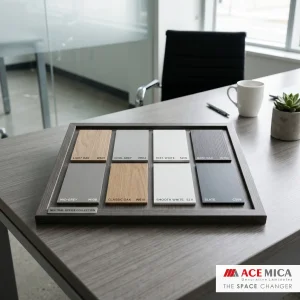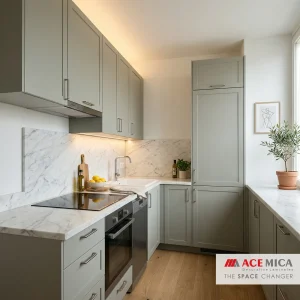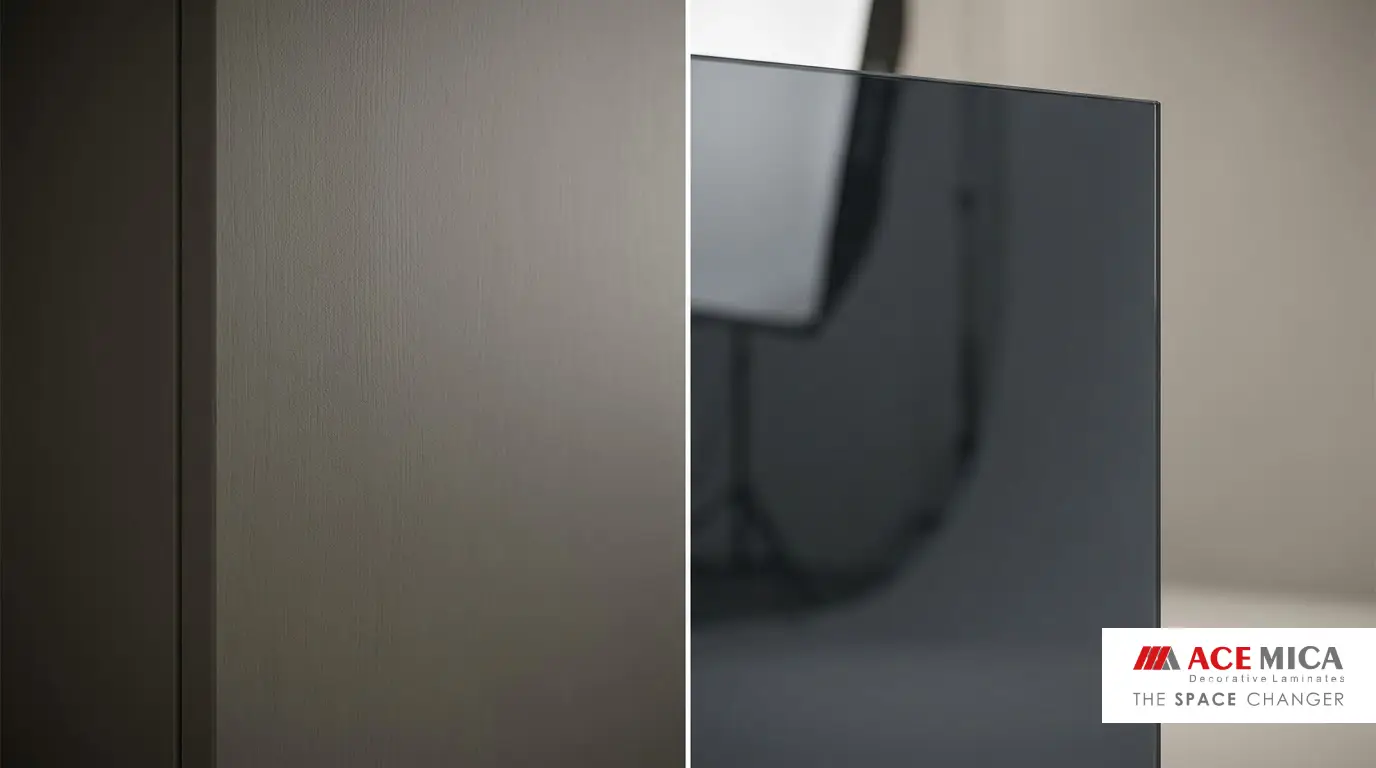
Laminate is the more practical, cost-effective and widely available finish for most Indian homes, while acrylic delivers a deeper, mirror-like gloss that some buyers prefer for feature pieces despite its higher price and greater care requirements. Acemica’s laminate range covers the full spectrum from matte to high gloss at a fraction of acrylic’s cost, making it the default choice for most kitchens and wardrobes. This guide compares the two finishes directly on cost, appearance, durability and maintenance so you can decide which suits your specific project.
What Sets Laminate and Acrylic Apart
Laminate is a resin-impregnated paper layer bonded under heat and pressure to a core board, while acrylic is a thicker plastic sheet, usually applied over MDF, that delivers a much deeper, glass-like shine, particularly in high-gloss colours. The manufacturing process is fundamentally different, which is what drives the differences in cost, feel and maintenance between the two.
Cost Comparison: Why Laminate Remains the Default Choice
Acrylic sheets typically cost noticeably more than laminate sheets of comparable size, largely because of the thicker material and more involved bonding process required. For most residential kitchen and wardrobe projects in India, this price gap is the single biggest factor pushing buyers toward laminate as the practical default.
Acemica prices its full laminate range to remain accessible across project budgets, from entry-level 0.8mm sheets to premium 1mm textured finishes, without the steep cost jump that acrylic typically involves.
Appearance and Gloss: Where Acrylic Has an Edge
Acrylic’s thickness gives it a genuine depth of gloss that even the best high-gloss laminate finds difficult to fully replicate, which is why acrylic remains popular for statement kitchen islands or feature wardrobe panels where a showroom-level shine is the goal.
- Acrylic: deeper mirror-like gloss, richer colour depth in dark shades
- Laminate: wide colour and texture range, including matte, textured and wood-finish options acrylic rarely matches
- Acrylic: limited to gloss and semi-gloss finishes in most product lines
- Laminate: available in gloss, matte and textured finishes from a single manufacturer catalogue
Maintenance and Durability in Daily Use
Acrylic surfaces show fingerprints, water spots and fine scratches more readily than laminate and generally require more frequent, careful cleaning to maintain their glossy appearance. Laminate, particularly in matte or textured finishes, tolerates daily kitchen use with far less visible wear over time.
Acemica recommends laminate over acrylic for any high-traffic kitchen surface where daily cooking, cleaning and utensil contact are expected, reserving acrylic for lower-contact feature panels if a specific project calls for that level of shine.
Which Finish Fits Your Project
For most kitchens, wardrobes and everyday furniture, laminate offers the better balance of cost, durability and design range. Acrylic makes sense specifically for a feature element, such as a single accent panel or island front, where budget allows and daily wear exposure is limited.
Installation Complexity: Another Practical Difference
Acrylic sheets are thicker and more rigid than laminate, which makes them noticeably harder to cut, edge and install cleanly without specialised equipment and an experienced fabricator. Laminate, by contrast, is a well-understood material for most carpenters across India, meaning installation is faster, more predictable in quality, and available from a far wider pool of skilled tradespeople.
This installation difference compounds the cost gap between the two finishes, since acrylic projects often carry a higher labour cost alongside the higher material cost, particularly outside major metro areas where acrylic-specialist fabricators are less common. For most homeowners working with a local carpenter rather than a specialised modular kitchen company, this practical constraint alone often settles the decision in favour of laminate.
A Simple Decision Framework for Your Project
When deciding between laminate and acrylic for a specific piece of furniture, three questions typically settle the decision quickly: how much daily contact will the surface see, how important is achieving the deepest possible gloss, and what is the available budget for that specific element.
- High daily contact, moderate budget: choose laminate in a matte or textured finish
- Low daily contact, unlimited budget, showroom-level gloss desired: acrylic is a reasonable choice
- Mixed project with one feature element: laminate throughout, acrylic on a single accent panel
- Budget-constrained project of any kind: laminate is almost always the more practical specification
Real-World Signals That Point Toward Laminate
Most kitchen renovation projects in India, particularly outside the premium segment, settle on laminate not because acrylic is unknown but because the day-to-day realities of an Indian kitchen, including daily cooking, frequent cleaning, and household help using whatever cleaning products are on hand, favour a surface that tolerates a wider range of care habits without showing visible wear.
Acrylic tends to be chosen more often for a specific design moment, such as a single striking island front in an otherwise laminate kitchen, or for buyers who have a dedicated cleaning routine and budget set aside specifically to maintain a higher-gloss finish over time. Recognising which category a project falls into early in the planning process avoids switching finishes midway through, which is disruptive and costly once cutting and fabrication have begun.
Environmental and Repair Considerations
Laminate sheets are generally easier to source as an exact colour and finish match years after the original installation, since laminate manufacturing runs are more standardised and widely stocked across India than acrylic sheets, which are often produced in smaller, more specialised batches. This matters if a single panel needs replacing after damage, since finding a matching acrylic sheet years later can be considerably harder than sourcing the same laminate code from an ongoing product line.
From a repair standpoint, a damaged laminate panel can usually be replaced individually without affecting the surrounding cabinetry, while acrylic repairs sometimes require replacing a larger connected section to maintain a consistent gloss level across the piece, adding further cost to any future repair work.
Talking to Your Kitchen Designer About Finish Options
When discussing finish options with a kitchen designer or modular kitchen showroom, asking directly which sections of the design team recommend laminate versus acrylic, and why, often surfaces useful project-specific reasoning beyond the general guidance in this comparison. Showroom staff can usually point to real installations of both finishes at different ages, which is a practical way to see how each material actually performs after a few years rather than relying on how it looks brand new.
Bringing this comparison guide into that conversation, along with a clear sense of budget and how the kitchen will actually be used day to day, helps ensure the final recommendation fits the household rather than defaulting to whichever finish the showroom prefers to sell.
A Quick Summary for Busy Readers
Laminate suits the overwhelming majority of kitchens and wardrobes in India, combining reasonable cost, a wide finish range, and strong day-to-day durability, while acrylic remains a valid choice specifically for a single feature element in a project where budget allows and daily contact is limited. The full Acemica laminate catalogue is priced to make the durable, practical choice the accessible one for most households, without forcing a trade-off between design variety and long-term cost.
Laminate vs Acrylic: Side-by-Side Comparison
| Factor | Laminate | Acrylic |
|---|---|---|
| Relative Cost | Lower | Higher |
| Gloss Depth | Good to Very Good | Excellent, mirror-like |
| Finish Variety | Gloss, matte, textured, wood-finish | Mainly gloss and semi-gloss |
| Scratch Visibility | Low (matte/textured) | Higher, especially in dark colours |
| Maintenance Effort | Low | Moderate to High |
| Best Use | Kitchens, wardrobes, everyday furniture | Feature panels, low-contact accents |
Frequently Asked Questions
Is acrylic always more expensive than laminate?
In almost all cases, yes, acrylic sheets cost more than laminate sheets of comparable size due to the thicker material and more involved manufacturing process.
Can laminate achieve the same shine as acrylic?
High-gloss laminate comes close but generally does not match the depth of shine acrylic offers, particularly in dark colours, though laminate compensates with a far wider range of finishes overall.
Which finish is better for a kitchen with daily cooking use?
Laminate, particularly in a matte or textured finish, is the more practical choice for daily kitchen use since it shows fingerprints, water spots and fine scratches far less than acrylic.
Does Acemica manufacture acrylic sheets as well as laminate?
Acemica specialises in decorative laminate sheets across gloss, matte and textured finishes, offering a cost-effective alternative to acrylic for the vast majority of residential and commercial applications.
Can laminate and acrylic be combined in the same kitchen?
Yes, a common approach is using laminate across the main cabinetry for cost and durability, with a single acrylic accent panel or island front where a higher-gloss feature is desired.
Get Started with Acemica
For most kitchens and wardrobes, Acemica’s laminate range delivers the design flexibility and durability needed at a fraction of acrylic’s cost. Explore the full catalogue of gloss, matte and textured finishes, or contact the Acemica team to discuss the right finish for your specific project and budget.
Explore our high-gloss vs matte laminate guide, the Flavors laminate catalogue and the Acemica team to plan your next project.