Laminate sheet prices in India vary widely based on thickness, finish, brand and grade, which makes it hard to compare options at a glance. Understanding what drives the price helps you judge whether a quote is fair and where it makes sense to spend more. This guide explains the typical price factors and how to get genuine value from a decorative laminate purchase.
Buyers often compare laminate quotes purely on the per-sheet number without accounting for what is actually included, such as thickness, treatment or finish grade, which makes two quotes that look similar on paper end up delivering very different furniture. Reading a quote correctly is as important as finding a low number.
What Determines Laminate Sheet Prices in India
Laminate sheet prices are driven mainly by thickness, finish type, and the grade of the sheet. Thicker 1mm laminates cost more than 0.8mm sheets because they use more material and offer better durability, while premium finishes such as high gloss, metallic and textured surfaces carry a higher price than standard matte or woodgrain.
Brand reputation, design exclusivity and post treatment also affect price. Anti scratch, anti fingerprint and antibacterial treatments add cost, as do exclusive designer collections. Acemica positions its decorative range to balance quality treatments and design depth against competitive value.
It also helps to separate the sheet price from the finished cost. The laminate sheet is only one line item in a piece of furniture, alongside the board, hardware, edge banding and labour. A modest increase in laminate quality often adds very little to the total project cost while noticeably improving how the finished piece looks and lasts.
Regional factors play a part too. Freight, local dealer margins and availability can move the on-ground price of the same sheet from one city to another. Buying from a manufacturer with strong distribution helps keep pricing consistent and predictable across projects.
How Does Thickness Affect Laminate Price
Thickness is one of the clearest price drivers. A 1mm decorative laminate typically costs more per sheet than a 0.8mm sheet because it contains more kraft paper layers and delivers stronger impact and wear resistance.
The right thickness depends on the application. Use 1mm on high wear surfaces such as tabletops, shutter fronts and commercial furniture, and 0.8mm on lower wear surfaces such as internal panels and wardrobes interiors. Matching thickness to use is the simplest way to control cost without sacrificing durability.
There is a durability payoff that justifies the thickness premium in the right places. On surfaces that take daily impact, a 1mm sheet resists the chips and edge damage that would force an early, and expensive, replacement of a 0.8mm surface. Spending a little more upfront on the busy surfaces usually saves money over the life of the furniture.
For purely decorative vertical surfaces that never get touched, though, there is little reason to pay for extra thickness. This is exactly the kind of judgement that keeps a project both durable and affordable, and it is where an experienced supplier can guide the specification.
Which Finishes Cost More
Premium finishes command higher prices. High gloss, metallic, mirror and heavily textured laminates involve more complex manufacturing and specialist top layers, so they sit at the upper end of the range.
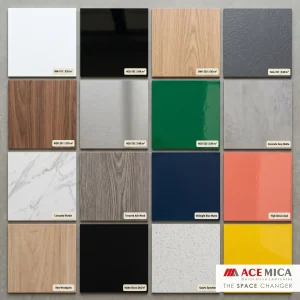
Standard matte, suede and woodgrain finishes are more economical and cover the majority of residential needs. Because Acemica carries a broad spread of finishes, buyers can choose a premium look for statement surfaces while using value finishes elsewhere in the same project.
Special surface treatments are another price lever worth understanding. Anti fingerprint, anti scratch and antibacterial coatings genuinely improve day to day living, particularly on kitchen and high touch surfaces, but they are not necessary everywhere. Applying them selectively to the surfaces that benefit most keeps the budget focused.
Design exclusivity carries a premium as well. Signature and limited collections cost more because of their unique patterns and lower production volumes, while core catalogue designs offer excellent looks at a more accessible price. Many projects mix a few premium designs on feature pieces with core designs elsewhere.
Comparison Table: Laminate Price Factors
| Price Factor | Lower Cost | Higher Cost |
|---|---|---|
| Thickness | 0.8mm | 1mm and above |
| Finish | Matte, suede, woodgrain | High gloss, metallic, textured |
| Treatment | Standard | Anti scratch, antibacterial |
| Design | Core collections | Exclusive designer ranges |
| Grade | Standard grade | Premium grade |
| Best value approach | Match product to application | Reserve premium for key surfaces |
How Can You Get Better Value on Laminates
The best value comes from matching the product to the job rather than buying the cheapest or the most expensive sheet everywhere. Reserve premium thickness and finishes for surfaces that are seen and touched most, and use standard grades for hidden or low wear areas.
Buying from a manufacturer with a wide in house range also reduces cost and coordination effort, since you avoid sourcing across multiple suppliers. Acemica’s catalogue spans budget friendly to premium collections, letting you build a complete project from one trusted source.
Another way to protect value is to choose timeless designs over trend led ones for large, permanent surfaces. A classic woodgrain or neutral will still look right in ten years, whereas a very of-the-moment pattern may date and prompt an early refresh. Save the bold, trend driven choices for smaller, easily changed elements.
Finally, consistency of supply has a hidden value. Choosing a manufacturer who reliably stocks your chosen designs means you can match or extend furniture later without hunting for a discontinued sheet. That reliability is worth as much as the sticker price on a long term project.
Are Cheaper Laminates Worth It
Very cheap laminates can be a false economy. Thin, low grade sheets are more prone to chipping, peeling and colour fade, which often means earlier replacement and higher lifetime cost.
A mid range decorative laminate from an established manufacturer usually delivers the best balance of price and longevity. Acemica focuses on this value zone, offering durable, well finished laminates that hold up over years of daily use rather than the lowest possible upfront price.
The lifetime cost view is the one that matters most. A slightly higher spend on a durable, well finished laminate that lasts twelve to fifteen years is cheaper per year than a bargain sheet that needs replacing in five. When clients weigh it this way, the mid range option almost always wins.
None of this means overspending. It means spending deliberately, putting quality where it earns its keep and value where it does not. That balanced approach, more than any single price, is what delivers a project that looks good, lasts well and respects the budget.
When comparing quotes from different suppliers, always confirm you are comparing the same thickness, finish category and treatment level, since a lower number often simply reflects a thinner or more basic specification rather than genuine savings. Asking for a like for like comparison protects you from an apples to oranges decision that only becomes obvious after installation.
For larger projects, negotiating on volume rather than chasing the cheapest per sheet rate usually delivers better overall value. A manufacturer with a broad catalogue can often bundle premium and standard designs into a single order at a blended rate that beats piecing together the lowest price on every individual sheet from different sources.
It also pays to plan laminate purchases around the full project timeline rather than buying in small batches as work progresses. Ordering the complete quantity needed for a project in one go, once designs are finalised, locks in a consistent batch and shade across every piece of furniture, and often secures a better rate than repeated small orders placed over several months as the project unfolds.
Frequently Asked Questions
How much does a laminate sheet cost in India?
Laminate sheet prices in India depend on thickness, finish and grade. 0.8mm sheets sit at the value end, while 1mm and premium finishes such as gloss and metallic cost more. Requesting a current quote for your chosen designs gives the most accurate figure.
Is 1mm laminate more expensive than 0.8mm?
Yes. A 1mm laminate costs more than a 0.8mm sheet because it uses more material and offers stronger impact and wear resistance. It is worth the difference on high wear surfaces.
Why do some laminates cost more than others?
Price rises with thicker sheets, premium finishes like gloss and metallic, special treatments such as anti fingerprint coatings, and exclusive designer collections. Standard matte and woodgrain finishes are the most economical.
Are cheap laminates a good idea?
Very cheap laminates can chip, peel or fade sooner, raising the real long term cost. A mid range decorative laminate from an established manufacturer usually offers the best balance of price and durability.
How can I reduce my laminate cost without losing quality?
Match the product to the application. Use premium thickness and finishes only on surfaces that are seen and touched most, and standard grades elsewhere. Buying from one manufacturer with a wide range also cuts sourcing cost.
View the full Acemica decorative laminate Acemica catalogue across value and premium collections, or contact Acemica for current pricing and product recommendations for your project.