The Anantara collection is built around rich, enduring finishes that draw on classic Indian design sensibilities, offering a laminate range meant to feel timeless rather than tied to a passing trend. Where seasonal collections chase the latest colour moment, Anantara is designed for homeowners who want a kitchen, wardrobe or living space that will still feel right a decade from now. This guide introduces the collection and its place within a considered, long-term interior.
What Defines the Anantara Collection
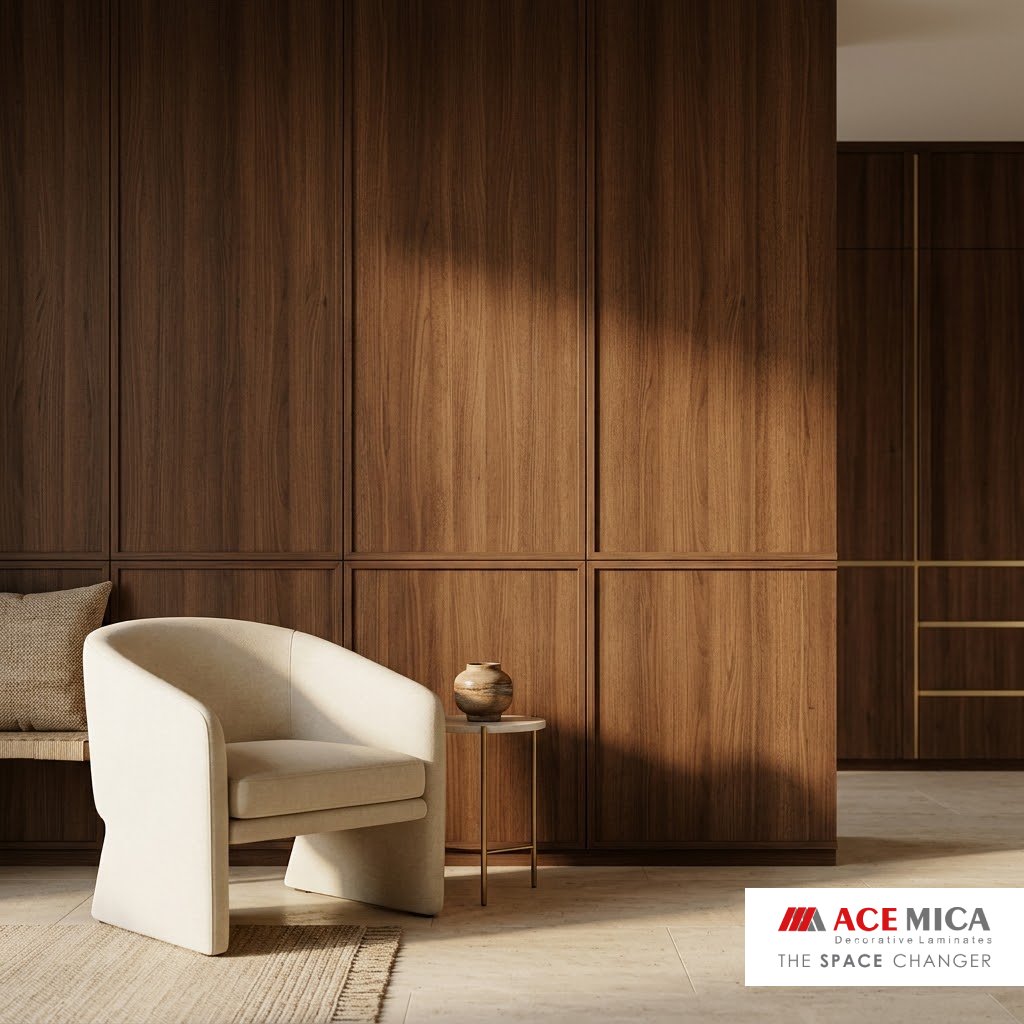
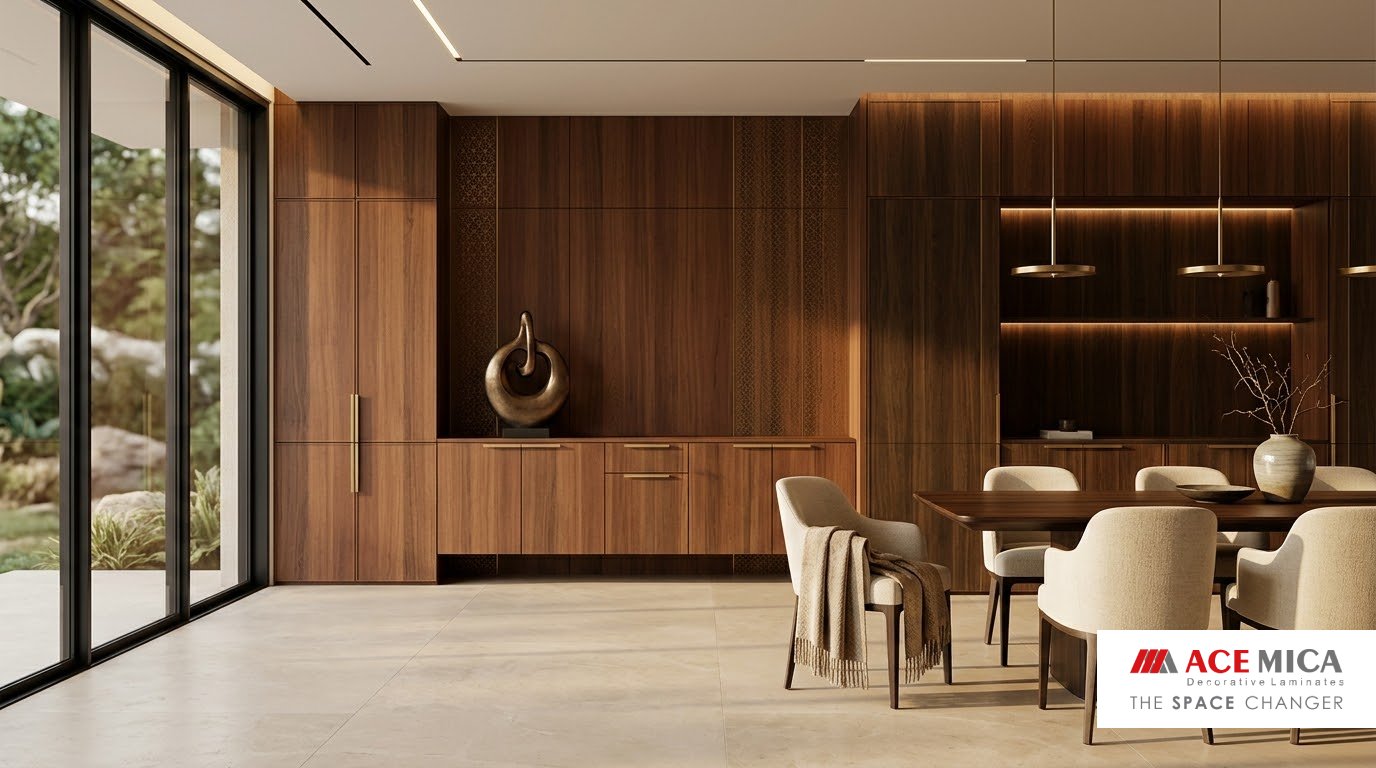
Anantara draws on deep, warm wood tones, rich jewel-inspired accents and traditional pattern motifs reinterpreted for contemporary surfaces. The collection favours colours and textures with lasting appeal, such as deep teak, warm mahogany and richly textured stone-look finishes, rather than fast-moving seasonal shades.
This design philosophy makes Anantara particularly suited to formal living spaces, dining rooms and primary bedrooms, where homeowners are making a longer-term design commitment and want a surface that will continue to feel considered and elegant for years to come.
The name Anantara evokes a sense of continuity and permanence, values reflected directly in the collection’s design brief. Rather than chasing the pattern language of any particular design era, Anantara references motifs and tones that have remained visually relevant across generations of Indian interior design, from traditional havelis to more contemporary formal interiors.
This is reflected in the collection’s surface treatment as well, which favours a rich, slightly textured finish over a high-gloss or ultra-flat surface, giving Anantara a tactile depth that reads as substantial and considered rather than trend-driven or disposable.
Where Does Anantara Work Best in a Home
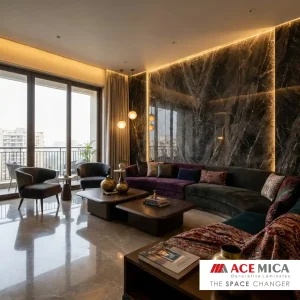
Dining rooms and formal living spaces benefit strongly from Anantara’s rich, warm tones, which create an inviting, richly finished atmosphere well suited to entertaining and family gatherings. The collection’s deeper colourways also work beautifully in primary bedrooms where a sense of permanence and comfort is the goal.
Anantara is equally at home in traditional and transitional Indian interiors, where its pattern motifs and warm palette complement existing design language, as well as in contemporary homes seeking a grounding, timeless material amid more minimal surroundings.
Home libraries and study rooms furnished for long-term use are another strong fit for Anantara, where the collection’s rich tones support a serious, focused atmosphere well suited to a room intended for reading, working and quiet reflection over many years.
Entrance foyers in larger homes also benefit from Anantara’s grounding presence, setting a tone of considered permanence from the moment guests step through the door, an effect that a more fleeting, trend-led finish would struggle to achieve in the same way.
Why Choose a Timeless Collection Over a Trend-Led One
Trend-led colours and patterns can date within a few years as design preferences shift, which means surfaces chosen purely for their current popularity may need replacing sooner than their physical lifespan would otherwise require. Anantara’s design approach avoids this by drawing on classic tones and motifs with long-established appeal.
This makes the collection a practical choice for large, permanent surfaces such as kitchen cabinetry or built-in wardrobes, where the cost and disruption of replacement is significant. Choosing a timeless finish for these bigger commitments while saving trend-led choices for smaller, easily updated elements is a strategy many designers recommend.
There is also a practical financial argument for this approach. Replacing large-format cabinetry or built-in wardrobes is a significant expense involving not just materials but labour, disruption and often matching adjoining surfaces. Choosing a timeless finish for these big-ticket items reduces the likelihood of wanting to replace them purely on aesthetic grounds within a five to ten year window.
Interior designers advising long-term homeowners, as opposed to short-term renovation-and-sell projects, consistently steer larger, structural material decisions toward timeless collections like Anantara for exactly this reason, reserving trend-led choices for soft furnishings, paint and easily replaced accessories instead.
Comparison Table: Anantara vs Trend-Led Collections
| Factor | Anantara Collection | Trend-Led Collections |
|---|---|---|
| Design approach | Timeless, classic-inspired tones | Current seasonal colours and patterns |
| Longevity of appeal | Long-lasting, unlikely to date | Can date within a few years |
| Best for | Large permanent surfaces, formal rooms | Accent pieces, easily updated surfaces |
| Palette | Deep wood tones, jewel accents | Varies with current trends |
| Pairing style | Brass hardware, warm lighting, natural materials | Depends on the trend direction |
| Ideal buyer | Long-term homeowners, formal interiors | Renters, frequently refreshed spaces |
How Do You Style a Room Around Anantara
Lean into the collection’s warmth by pairing it with brass or bronze hardware, warm ambient lighting and natural materials such as wood, stone and woven textiles. These pairings reinforce Anantara’s rich, grounded character rather than working against it.
Balance the depth of Anantara’s tones with lighter wall colours and softer soft furnishings, which prevents a room from feeling too heavy while still allowing the laminate’s rich character to lead the space. This contrast is a reliable way to keep richly toned interiors feeling elegant rather than dark.
Artwork and decorative objects with a sense of craft and heritage, such as hand-finished ceramics, woven textiles or brass accents, sit particularly well alongside Anantara, reinforcing rather than competing with the collection’s own sense of considered permanence.
Avoid pairing Anantara with overly minimal, industrial-style furniture, which tends to clash with the collection’s warmth rather than complement it. Furniture with some visible craft or detail, even within a broadly contemporary silhouette, tends to sit more comfortably alongside Anantara’s rich surface character.
Is Anantara Suitable for Modern Homes
Yes. While Anantara’s inspiration is traditional, its finishes translate well into contemporary layouts, particularly when paired with clean-lined cabinetry and minimal hardware. The richness of the material provides warmth and character in modern spaces that might otherwise feel cool or under-detailed.
Many homeowners use Anantara as a grounding element within an otherwise contemporary scheme, such as a kitchen island or dining table surface, letting the collection’s timeless character anchor a room built primarily from more minimal, modern materials.
Anantara also performs well in homes that blend generations under one roof, a common living arrangement across much of India, since its timeless character tends to appeal broadly across different age groups and design preferences rather than skewing toward a single generation’s current taste.
For families planning a home they intend to live in for decades rather than years, Anantara offers a rare quality in decorative surfaces: the confidence that a choice made today will still feel right, rather than dated, when the next generation eventually inherits the space.
When planning a project around Anantara, it is worth involving a designer early if the goal is a fully coordinated formal space, since balancing the collection’s rich tones against lighting, furniture and adjoining rooms benefits from experienced guidance to avoid a scheme that feels heavy rather than warm.
Acemica maintains consistent stock across the Anantara collection specifically to support long-term homeowners who may wish to extend or repair a space years after the original installation, an assurance that shorter-lived trend collections are less able to offer given how quickly design preferences shift.
Frequently Asked Questions
What makes the Anantara collection different from seasonal ranges?
Anantara is built around timeless, classic-inspired tones and motifs designed to remain appealing for years, rather than colours tied to a current seasonal trend that may date more quickly.
Where should I use Anantara laminates in my home?
Anantara works particularly well in dining rooms, formal living spaces and primary bedrooms, where its rich, warm tones create a refined, lasting atmosphere.
Is Anantara suitable for a modern, minimal home?
Yes. Anantara’s rich finishes pair well with clean-lined, contemporary cabinetry, often used as a grounding element such as a kitchen island within an otherwise minimal scheme.
Why choose a timeless collection for kitchen cabinetry?
Kitchen cabinetry is a large, costly-to-replace surface, so a timeless finish like Anantara avoids the risk of a trend-led colour dating before the material itself reaches the end of its usable life.
What hardware and materials pair well with Anantara?
Brass or bronze hardware, warm ambient lighting, and natural materials such as wood, stone and woven textiles all complement Anantara’s rich, grounded character.
Call to Action: Explore the Anantara laminate collection in the Acemica catalogue for timeless, richly toned finishes, or contact the team to request samples for your next long-term interior project.