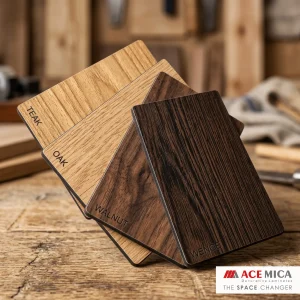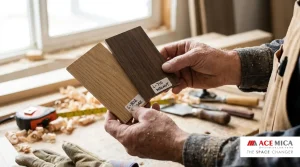
You check laminate quality by measuring its thickness, reading the back, inspecting the cut edge, viewing the surface at a low angle and testing a sample piece before you buy the lot. A good laminate is consistent: the same thickness across the sheet, the same shade across the batch, an evenly sanded back and a clean face. None of these checks needs a laboratory, and together they take about ten minutes at the dealer’s counter.
What makes a laminate good quality?
A good quality laminate is one that behaves the same way from the first sheet to the last. Design gets a sheet chosen. Consistency decides whether the furniture still looks right in five years.
Quality comes from four things in the factory: the paper, the resin, the press cycle and the finishing. A buyer cannot see any of them directly. What a buyer can see are their results, and each check below reads one of those results. If you want the background first, how laminates are made explains each stage.
How do you check the thickness of a laminate?
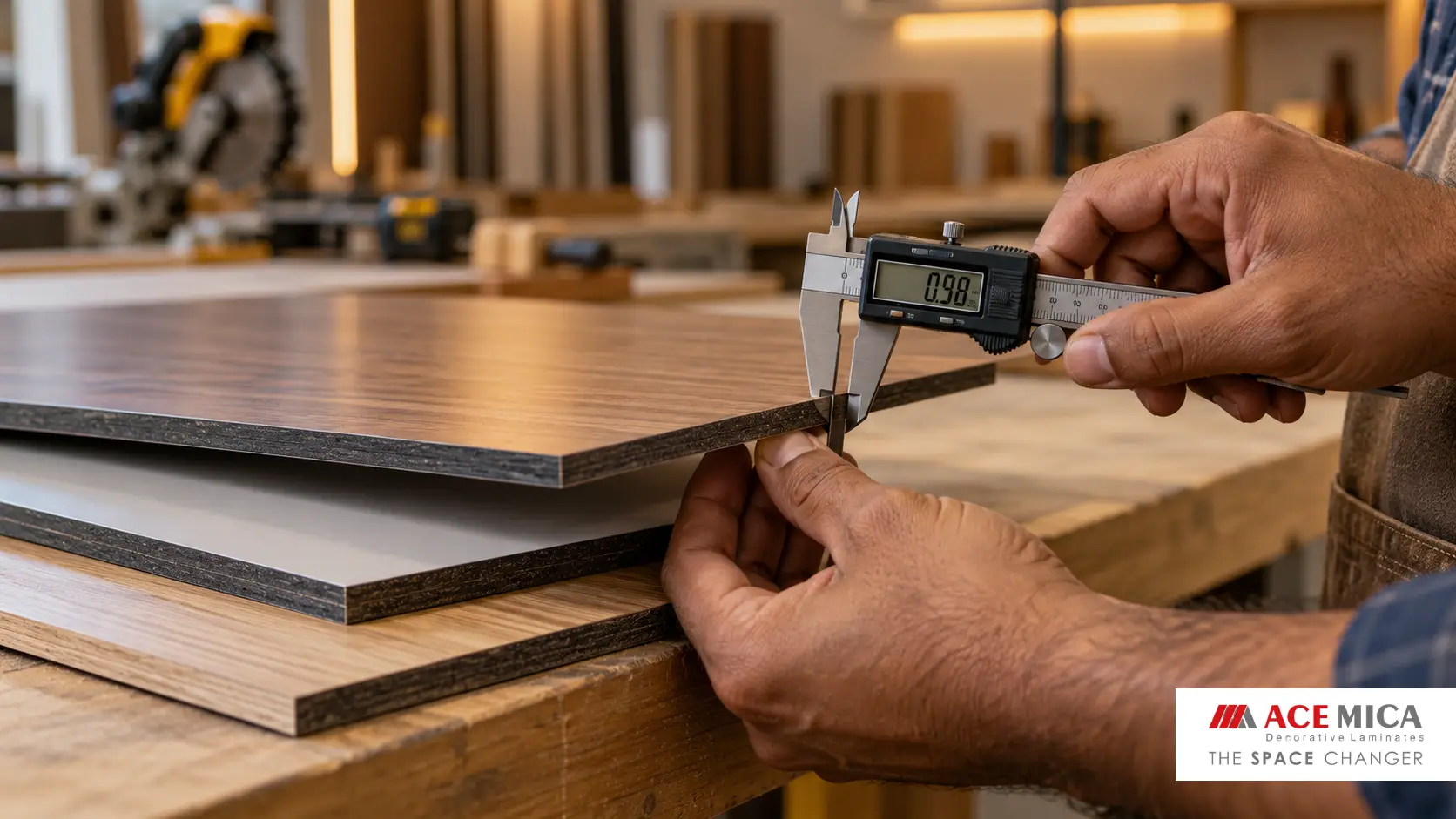
You check thickness with a vernier caliper or a micrometer at the edge of the sheet, at three or four points. The readings should be close to the thickness you are paying for and close to each other.
Laminates are sold by nominal thickness, and the market carries several steps: 0.8mm, 0.92mm, 1mm and 1.25mm are all common. Acemica lists laminates from 0.5mm to 20mm, so the stated thickness on the invoice matters as much as the design name. Two things should make you pause: a sheet sold as 1mm that measures closer to the step below, and a sheet whose reading wanders noticeably from one corner to another. The first costs you money. The second tells you the pressing was uneven. The existing guide to 1mm vs 0.8mm laminates covers which thickness suits which job.
What should the back of the sheet tell you?
The back of a laminate should be evenly sanded and clearly marked. Turn the sheet over before you look at the design.
- Sanding. The back is sanded at the factory so adhesive can grip it. It should look uniformly matt and feel slightly rough all over. Shiny, unsanded patches will not bond properly and are where bubbles start.
- Marking. Branded sheets carry a mark on the reverse, usually the brand or collection name. Match it to the catalogue you selected from. An unmarked back on a sheet sold under a known name deserves a question.
- Colour. The back should be an even brown. Pale streaks or dark blotches point to uneven resin in the core.
What does the cut edge reveal?
The cut edge shows you the core, and the core is most of the laminate. Look at a trimmed edge or ask the dealer to snap a corner from a sample.
A sound edge is tight and uniform, a single dense brown band under a thin decorative layer. A poor edge shows fine lines between layers, flaking when you run a thumbnail along it, or a chalky, crumbly break. Layers that can be picked apart mean the resin did not cure fully, and a sheet like that can blister later near heat or moisture.
How do you judge the surface?
You judge the surface by tilting the sheet against the light and looking along it at a low angle. Faults that are invisible head-on stand out this way.
- Specks and pinholes. Tiny dark dots or pits come from dust in the press.
- Dull or glossy patches. An uneven sheen on a matt sheet, or a cloudy area on a gloss sheet, means uneven pressure or a worn plate.
- Dents and plate marks. Repeating marks at the same spot on several sheets come from a damaged plate.
- Texture. On a textured design, the pattern should have the same depth across the sheet, not fade towards one side.
- Print. Woodgrain and stone prints should be sharp. A soft or blurred print is a paper quality issue.
Check at least three sheets from the stack, not only the top one.
Which simple tests can you run on a sample?
You can run five simple tests on a sample offcut, and none of them damages the sheets you will buy. Ask the dealer for a hand sized piece of the same design.
| Test | How to do it | Good sign | Warning sign |
|---|---|---|---|
| Thickness | Measure the edge with a vernier | Matches the stated thickness | Reads a step lower |
| Flex | Bend the piece gently between two hands | Flexes and springs back | Cracks or crackling sounds early |
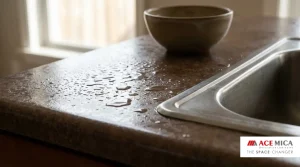
| Stain | Leave tea, turmeric paste or pen ink for an hour, then wipe | Wipes clean with mild soap | Leaves a shadow in the surface |
| Scratch | Drag a coin edge lightly across the face | Faint mark at most | A cut that catches a fingernail |
| Flatness | Lay the piece on a flat counter | Sits flat or nearly flat | Curls up strongly at the corners |
These are comparison tests, not certificates. Their value is in running the same test on two or three candidate sheets side by side. The difference between a careful maker and a careless one usually shows within minutes. Related reading: scratch resistant laminates.
What labels and paperwork should you ask for?
You should ask for three things: the catalogue reference, the batch and a proper invoice. Paperwork is the dullest part of buying laminate and the part that protects you.
- Catalogue reference. Note the collection name and design code exactly as printed in the catalogue. Acemica publishes every collection as a downloadable catalogue, so a design code can be checked against the source in a minute.
- Batch. Ask for all sheets from one lot and have it written on the challan.
- Invoice. The invoice should state brand, design code, finish, thickness and quantity. “Laminate, 12 sheets” protects nobody.
- Standard. For project work, ask whether the product is made to IS 2046, the Indian Standard for decorative thermosetting synthetic resin bonded laminated sheets, and request the manufacturer’s technical data sheet.
Why does shade matching count as a quality check?
Shade matching counts because a wardrobe built from two slightly different lots looks faulty even when both sheets are perfect. Small shade variation between production batches is normal across the industry.
Lay two sheets from your order side by side in daylight, with the grain running the same way, and look at the join. If you can see a step in tone, sort it out before the carpenter cuts anything. This matters most on plain colours and light woodgrains.
How can storage spoil a good laminate?
Storage can spoil a good laminate by bending, scratching or drying it out before it reaches the board. Many site complaints begin here and not in the factory.
- Store sheets flat, face to face and back to back, on a level base off the floor.
- Keep them away from direct sun, damp walls and wet plaster.
- Carry large sheets on edge with two people, or rolled loosely with the face inward.
- Let the sheets and the boards sit in the same room for a day or two before pressing.
What are the warning signs when buying laminate?
The warning signs are a price that is too good for the stated thickness, a missing brand mark, mixed lots and a seller who will not give you a sample. Any one of them is a reason to slow down. Two together are a reason to buy elsewhere.
Seeing full sheets in person helps more than any photograph. Acemica runs showrooms in Ahmedabad, Surat and Bangalore, where a design can be seen at full size and handled before an order is placed.
Frequently Asked Questions
How can I check the quality of a laminate sheet?
Measure the thickness with a vernier, check that the back is evenly sanded and marked, look for a tight uniform core at the cut edge, and view the surface at a low angle for specks, dents or dull patches. Then test a sample piece for stains and scratches before buying the full lot.
How do I know if a laminate is original?
Check the brand or collection marking on the back of the sheet and match the design code with the manufacturer’s published catalogue. Buy from an authorised dealer and insist on an invoice that states brand, design code, finish and thickness.
Does a thicker laminate mean better quality?
No. Thickness and quality are separate. A thicker sheet is firmer and hides board marks better, but a well made thinner laminate will outlast a poorly cured thicker one. Check consistency, edge and surface along with the thickness.
What is the Indian Standard for decorative laminates?
The Indian Standard is IS 2046, which covers decorative thermosetting synthetic resin bonded laminated sheets. Project specifications often refer to it, and buyers can ask the manufacturer for a technical data sheet that references the standard.
Should I test a laminate sample before buying?
Yes. A small offcut lets you check thickness, flexibility, stain resistance and scratch behaviour without risking the sheets you will use. Testing two or three options side by side is the quickest way to compare them fairly.
A ten minute check at the counter saves a great deal of regret on site. Start with the published source: every collection, with its design codes, is on the Brown Paper catalogue page, and product types, sizes and thicknesses are on the Our Brands page. To see full sheets or ask for samples, use the contact page.