The most scratch-resistant laminates are those with a higher-density surface layer and a matte or textured finish, since gloss surfaces show fine scratches far more visibly than matte ones even when the actual wear is similar. Acemica’s 1mm laminate range and its textured Flavors collection are built for exactly this kind of daily wear, from kitchen counters to office desks. This guide compares finish types, explains what actually causes visible scratching, and points to the Acemica ranges best suited for high-traffic homes and commercial spaces.
What Actually Causes a Laminate Surface to Show Scratches
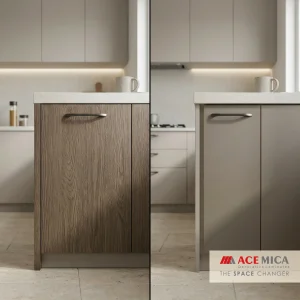
Every laminate surface can be scratched under enough pressure from a sharp or abrasive object, so the real question is not whether scratching is possible but how visible it becomes. High-gloss finishes reflect light directly, which makes even hairline scratches stand out, while matte and textured finishes scatter light and hide the same marks almost completely.
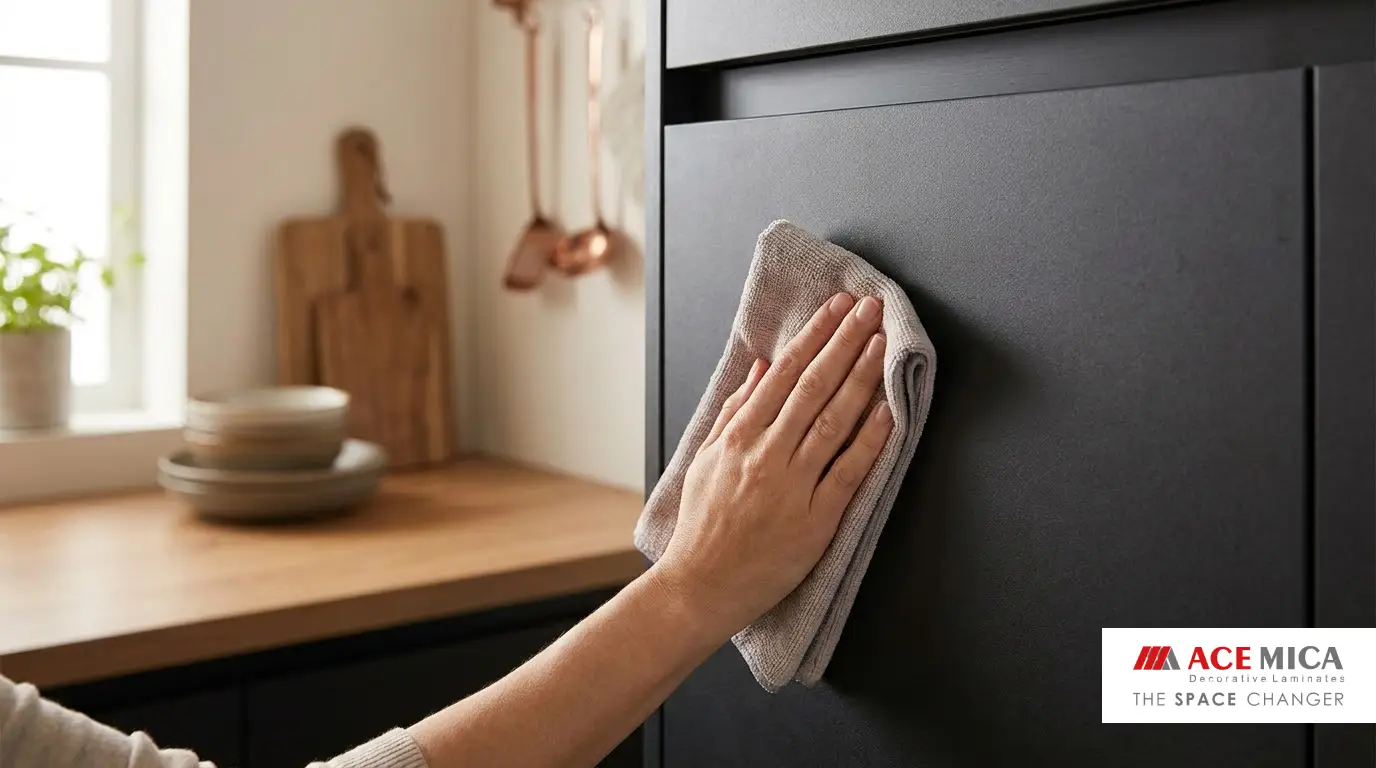
Grit and dust dragged across a surface, rather than a single sharp impact, cause the majority of everyday scratching in kitchens and wardrobes. This is why regular wiping with a slightly damp cloth, rather than dry wiping over accumulated dust, meaningfully reduces surface wear over time.
Where Scratch Resistance Matters Most
Kitchen countertops, cabinet shutters at hand height, office desks and study tables see the highest frequency of contact and are the priority zones for a scratch-resistant specification.
- Kitchen countertops and cabinet fronts, from utensils and daily cleaning
- Office desks and study tables, from pens, keys and laptop movement
- Wardrobe shutters at handle height, from repeated opening and closing
- Retail counters and reception desks, from continuous customer contact
How Acemica’s Laminate Ranges Compare for Durability
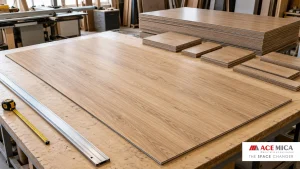
Acemica produces both high-gloss and matte or textured finishes across its core ranges, giving specifiers a genuine choice between visual style and practical wear tolerance. The standard 1mm Acemica laminate sheet is the recommended baseline for any high-traffic commercial or residential surface, since its added thickness improves resistance to both scratching and general impact compared to thinner 0.8mm options.
For projects that want a decorative, high-durability finish together, the Flavors collection offers textured surface options that hide fine surface wear noticeably better than a comparable gloss laminate, without sacrificing the design variety architects and homeowners look for.
Finish Type and Visible Wear: What to Expect Over Time
A high-gloss laminate will always show more visible micro-scratching over a two to three year period than a matte or textured laminate of the same thickness, purely because of how light interacts with the surface rather than any real difference in material toughness.
For kitchens specifically, a matte or fine-textured finish on countertops and lower cabinets, paired with gloss accents higher up where hand contact is rare, is a practical way to balance durability with design.
Care Habits That Extend Laminate Surface Life
Using cutting boards instead of cutting directly on a laminate countertop, lifting rather than dragging heavy cookware, and cleaning with a soft cloth rather than an abrasive scrubber are the three habits that make the biggest difference to how a laminate surface looks after several years of daily use. Acemica designs its 1mm laminate range specifically to hold up under exactly these daily kitchen conditions, so consistent basic care is usually all that is needed to keep the surface looking new.
How Laminate Thickness Affects Impact and Scratch Resistance
Thickness plays a larger role in scratch and impact resistance than most buyers realise, since a thicker laminate sheet distributes pressure from a knock or a dragged object across more material before it can mark the surface. The difference between a 0.8mm and a 1mm Acemica laminate sheet is most visible at corners and edges, which take the majority of accidental impact in daily use.
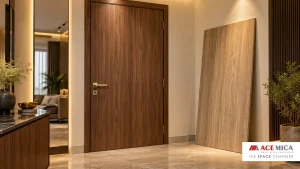
For vertical surfaces such as wardrobe shutters and cabinet doors, where contact is lighter and less frequent, 0.8mm laminate remains a perfectly durable and cost-effective choice. For horizontal, high-contact surfaces such as countertops, desks and dining table tops, stepping up to 1mm is the more resilient specification and is the standard recommendation across the Acemica catalogue for these applications.
Commercial environments such as retail counters and hospital or clinic reception desks see far higher daily contact volumes than a typical home, and specifiers in these settings should default to the thicker 1mm option paired with a matte or textured finish for the best combination of durability and low visible wear over the life of the fit-out.
A Quick Way to Judge a Sample Before Ordering
A useful test before committing to a full order is to take a laminate sample home and run a soft cloth lightly dampened with kitchen dust or fine grit across it under strong daylight, then compare how visible the resulting marks are on a gloss sample versus a matte or textured sample of the same colour family.
This simple comparison, done in the actual room where the furniture will sit, gives a far more realistic sense of long-term appearance than viewing samples under showroom lighting alone, since showroom lighting is usually more even and forgiving than a typical kitchen or office environment.
Scratch Resistance in Commercial vs Residential Settings
Commercial fit-outs such as retail counters, clinic reception desks and office pantries see a meaningfully higher volume of daily contact than even the busiest home kitchen, simply because of the sheer number of people interacting with the surface across a working day. Specifiers in these settings should treat the 1mm, matte or textured Acemica specification as a baseline requirement rather than an optional upgrade, since the cost difference over the life of a commercial fit-out is small compared to the cost of replacing worn panels ahead of schedule.
Residential settings generally allow more flexibility, since a home kitchen sees a fraction of the daily contact volume of a commercial space, and a homeowner can reasonably choose gloss finishes for lower-contact areas such as upper cabinets while reserving matte or textured laminate for counters and lower cabinet fronts. This mixed approach is common in Indian kitchen design and balances aesthetics with practical durability.
For shared or rented commercial spaces where the fit-out needs to last through multiple tenants without refinishing, prioritising durability over gloss appearance from the outset avoids the cost and disruption of an early refresh, which is a common and avoidable expense in retail and office environments.
Common Kitchen Habits That Accelerate Visible Wear
Beyond the finish and thickness chosen at purchase, a handful of everyday habits accelerate visible scratching regardless of how durable the laminate specification is. Sliding heavy appliances such as mixers or stand blenders across a counter instead of lifting them, using a countertop directly as a cutting surface, and cleaning with the same sponge used for scouring pots are the three most common causes of premature wear reported by homeowners.
Simple changes, such as keeping a dedicated cutting board on the counter at all times and training household members to lift rather than slide heavier items, cost nothing and extend the visible life of even a standard laminate surface well beyond what the finish specification alone would suggest. Over a five to ten year period, these small daily habits typically matter more to how a kitchen looks than the initial choice between two comparably rated laminate finishes.
Finish Comparison: Visible Scratch Tolerance by Laminate Type
| Finish Type | Scratch Visibility | Best Application | Maintenance Effort |
|---|---|---|---|
| High Gloss | High, marks show clearly | Feature panels, low-contact surfaces | High |
| Standard Matte | Low, marks largely hidden | Kitchen counters, office desks | Low |
| Acemica Flavors (textured) | Very Low, texture masks fine wear | Wardrobes, high-traffic shutters | Low |
| Acemica 1mm (matte/textured combo) | Very Low, with added impact resistance | Commercial counters, retail fit-outs | Low |
Frequently Asked Questions
Is matte laminate more scratch resistant than gloss laminate?
The underlying material toughness is similar, but matte and textured laminates hide fine scratches far better than gloss finishes because they scatter light rather than reflecting it directly, which is why matte is generally recommended for high-traffic surfaces.
Which Acemica laminate is best for a busy family kitchen?
The Acemica 1mm laminate range in a matte or textured finish is the standard recommendation for family kitchens, since the added thickness and finish combination hold up well against daily utensil contact and cleaning.
Can scratched laminate be repaired without full replacement?
Light surface scratches can often be minimised with a laminate-specific polish or filler, but deep scratches that reach the core layer usually require replacing the affected panel, which is another reason to prioritise scratch-resistant finishes at the specification stage.
Do textured laminates cost more than standard gloss laminates?
Textured and matte finishes are typically priced in a similar range to gloss options within the same laminate thickness, so the choice usually comes down to design preference and durability needs rather than a significant cost difference.
Are commercial spaces better suited to a different laminate grade than homes?
High-footfall commercial spaces such as retail counters and reception desks benefit from the same 1mm, matte or textured specification recommended for busy kitchens, since both settings share the same core requirement of hiding daily wear under constant contact.
Get Started with Acemica
Acemica stocks a wide range of matte, textured and gloss laminate finishes suited to both residential and commercial high-traffic surfaces. Explore the Flavors collection and the full 1mm laminate range in the Acemica catalogue, or reach out to the team for a finish recommendation suited to your project.
Explore the Flavors laminate catalogue, our 1mm vs 0.8mm laminate comparison guide and the Acemica team to plan your next project.