Designer laminate sheets have become the go-to choice for homeowners and designers who want a distinctive, premium finish without the cost of solid wood, stone or metal. Acemica’s designer range spans exclusive patterns, rich textures and refined colourways built for feature surfaces that need to make an impression. This guide walks through where designer laminates work best, how they differ from standard ranges, and how to choose the right one for your project.
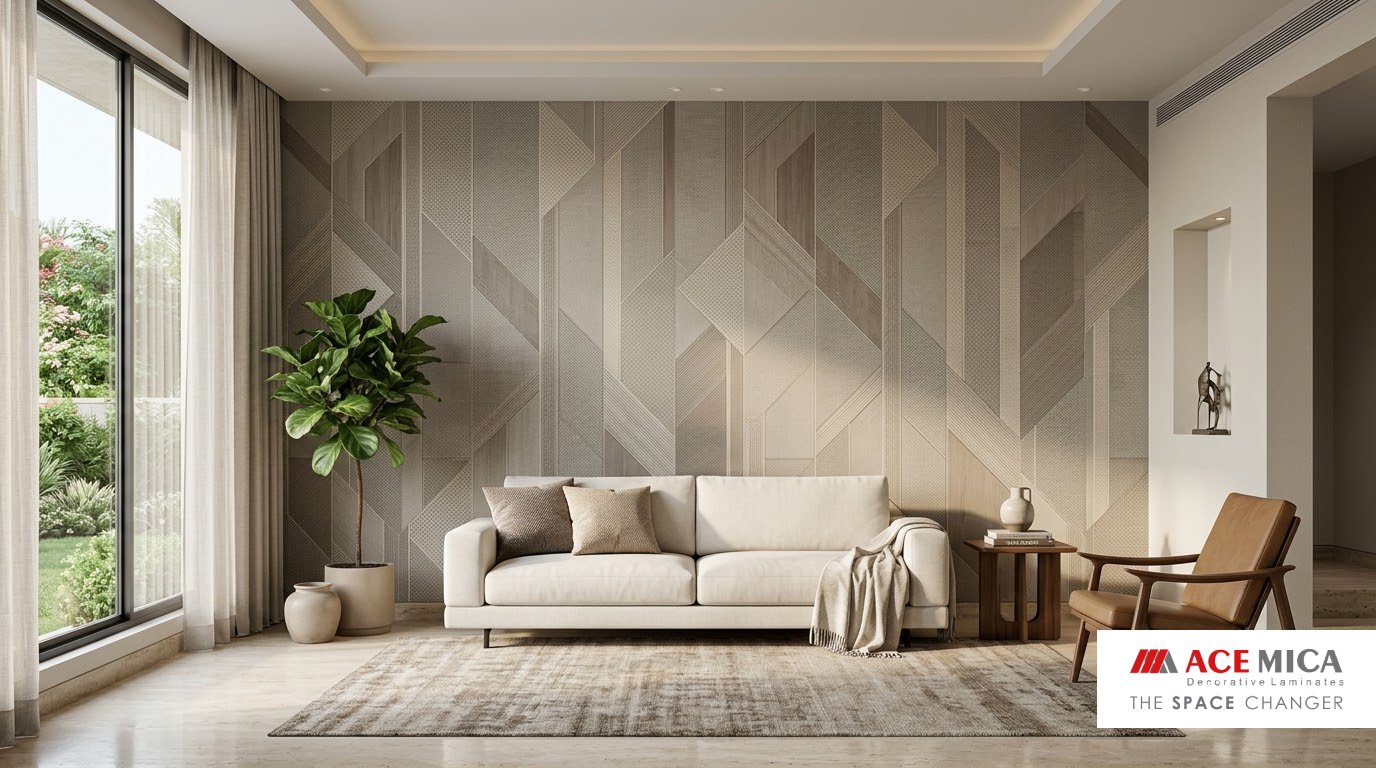
What Makes a Laminate Sheet a Designer Sheet
A designer laminate sheet is distinguished by its pattern exclusivity, finish complexity and overall visual depth compared to standard core collections. These sheets often combine multiple design techniques, such as layered textures, metallic accents or intricate woodgrain reproductions, giving them a bespoke, curated feel rather than a mass-market look.
Because designer laminates are produced in more limited runs with more advanced finishing processes, they carry more character per square foot than standard sheets. Acemica’s designer collection is built specifically for statement surfaces where the material itself becomes part of the design story, not just a functional backdrop.
This distinction shows up clearly when you compare production runs side by side. A standard laminate is engineered for reliable, repeatable output across huge volumes, which is exactly what a full-room renovation needs. A designer sheet is engineered the opposite way, prioritising a specific visual outcome over volume, which is why the collection carries a curated, gallery-like feel rather than a catalogue-of-everything approach.
For a manufacturer, offering a genuine designer tier also signals design investment beyond the basics. Acemica treats the designer range as an ongoing collection rather than a one-off release, refreshing patterns periodically so the range keeps pace with where interior design is heading rather than standing still.
Where Should You Use Designer Laminate Sheets
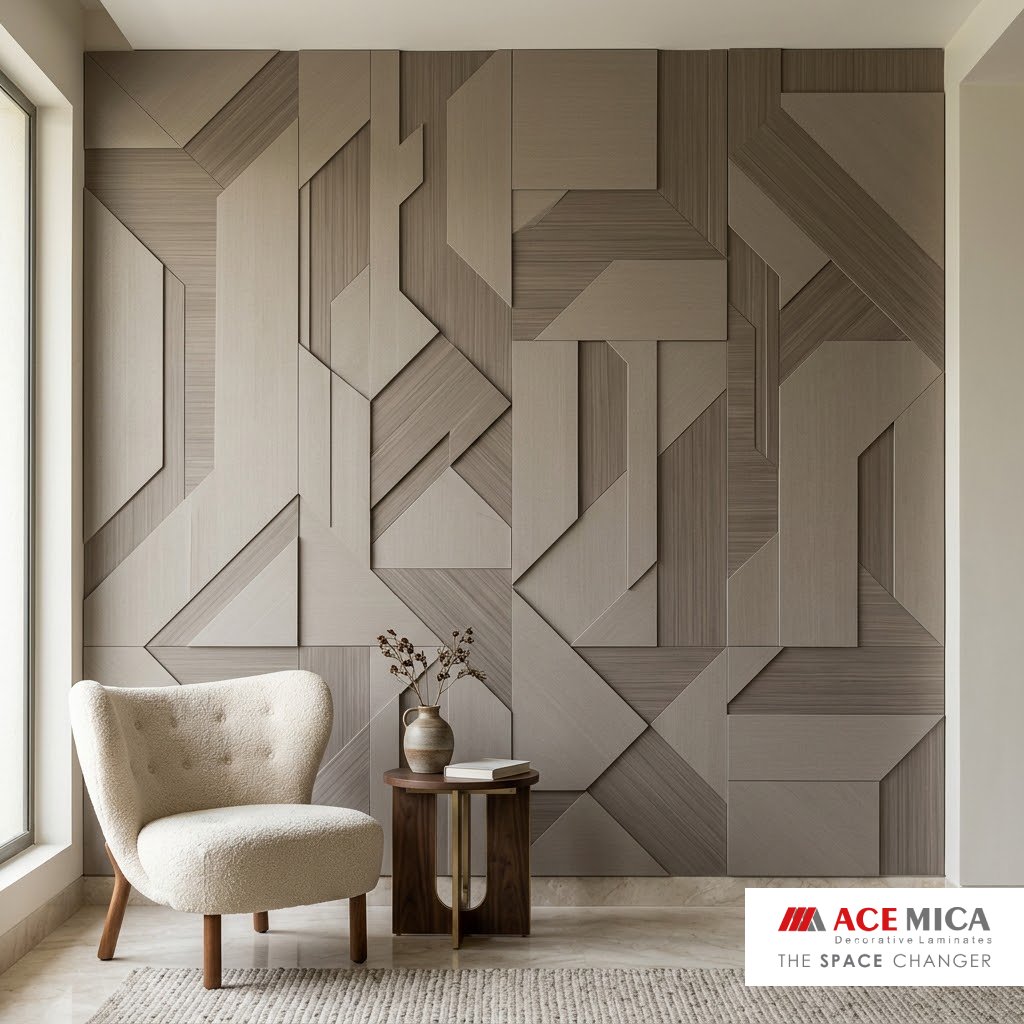
Designer laminates shine on feature walls, reception desks, statement furniture pieces and accent cabinetry where the surface is meant to be noticed. A single designer panel used as a focal point, such as behind a bed or on a kitchen island, can lift the feel of an entire room without requiring the expense of covering every surface in the premium finish.
They also work well in hospitality and retail interiors, where a distinctive material choice reinforces brand identity and creates a memorable environment for visitors. Pairing a designer sheet with simpler, standard finishes elsewhere in the same space keeps the overall project cost balanced while still delivering a premium impression where it counts most.
Corridors and stairwells are an underused opportunity for designer laminates. These transitional spaces are seen daily but rarely treated as a design priority, and a single designer panel along a stairwell wall or hallway can turn an overlooked space into a genuine highlight of the home, at a fraction of the material cost a full room would require.
When specifying for hospitality or retail, designer laminates also offer a practical advantage over paint or wallpaper in high-traffic zones: the durable laminate surface withstands contact from bags, trolleys and furniture far better than a painted or papered wall, without sacrificing the visual impact the space is designed around.
How Do Designer Laminates Differ From Standard Ranges
The clearest difference is pattern and finish exclusivity. Standard laminate ranges prioritise broad usability and cost efficiency, offering dependable woodgrains, solids and basic textures that suit the majority of everyday surfaces. Designer ranges instead prioritise visual distinction, often featuring patterns not available anywhere else in the catalogue.
Surface treatment is another point of difference. Designer sheets frequently combine two or more finishing techniques, such as a textured base with a subtle metallic sheen, creating a depth of appearance that a single-process standard laminate cannot replicate. This complexity is part of what gives designer surfaces their premium feel.
Colour depth is where the gap becomes most visible in person. A standard laminate typically uses one to two colour layers in its printing process, while designer sheets often use three or more layers combined with texture embossing, which is why designer surfaces can display subtle colour shifts and highlights that a flat standard finish cannot replicate.
This layering also affects how a surface behaves under different lighting. A designer laminate often looks noticeably different under warm evening lighting compared to daylight, adding a dynamic quality to the room that shifts through the day, whereas a standard laminate tends to read consistently regardless of the light source.
Comparison Table: Designer vs Standard Laminate Sheets
| Factor | Designer Laminate | Standard Laminate |
|---|---|---|
| Pattern exclusivity | Limited-run, distinctive designs | Broad, dependable core patterns |
| Finish complexity | Layered textures, multi-process finishes | Single-process finish |
| Best for | Feature walls, statement furniture | Everyday surfaces, full-room coverage |
| Visual impact | High, designed to be noticed | Consistent, understated |
| Typical use ratio | One or two surfaces per project | Majority of project surfaces |
| Price positioning | Premium tier | Value to mid tier |
How Do You Choose the Right Designer Pattern
Start with the room’s existing palette and the mood you want to create. A bold, high-contrast designer pattern suits a minimalist room that can carry a strong focal point, while a subtler textured designer finish works better in a space with several competing design elements already in play.
Scale matters too. On a large feature wall, an intricate pattern reads clearly and rewards close inspection, while on a smaller surface such as a cabinet front, a simpler designer texture often looks more considered than a busy pattern compressed into a tight area. Acemica’s design team can help match pattern scale to the actual dimensions of your surface.
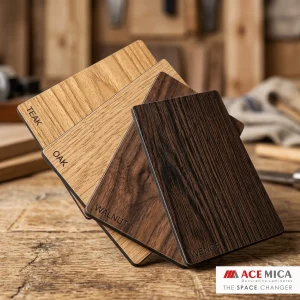
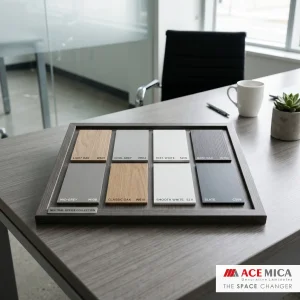
It also helps to see the pattern at actual size before finalising a decision, rather than judging from a small catalogue swatch. A pattern that looks busy in a five-centimetre sample can read as an elegant, flowing texture once seen across a full sheet, and Acemica can provide larger format samples specifically to remove this guesswork from the selection process.
Consider how the designer surface will be viewed day to day as well. A pattern chosen for a formal dining feature wall, seen mostly during evening entertaining, can afford to be bolder than one chosen for a kitchen island surface viewed constantly in daylight during everyday cooking and cleanup.
Are Designer Laminates Worth the Investment
For the surfaces that matter most in a project, designer laminates deliver a return in visual impact that is difficult to achieve any other way at a comparable price point. A single well-placed designer panel often does more for a room’s perceived value than fully upgrading every surface to a mid-tier finish.
The most cost-effective approach is selective use. Reserve designer sheets for the one or two surfaces that receive the most attention, such as an entryway feature wall or a kitchen island, and use Acemica’s standard collections for the remaining surfaces. This delivers a premium result without inflating the budget across the entire project.
Return on investment is easiest to see in resale and rental contexts as well. A home with one or two genuinely distinctive designer surfaces tends to stand out in listing photographs and walkthroughs far more than one finished entirely in safe, standard tones, giving the investment a practical payoff beyond personal enjoyment of the space.
For renovation projects working within a fixed budget, a useful rule of thumb is to allocate roughly ten to fifteen percent of the total laminate budget to designer sheets, concentrated on the one or two surfaces that will be seen most. This keeps the overall project affordable while still delivering a genuinely premium result where it counts.
A practical way to trial a designer surface without full commitment is to start with a single piece of statement furniture, such as a console table or sideboard, before extending the collection to a full feature wall. This lets homeowners live with the pattern at a smaller scale first, confirming the choice suits their taste and lighting before investing in a larger surface area.
Acemica’s design consultants can also advise on which designer patterns are currently seeing the strongest interest for specific room types, drawing on project data across the collection to help narrow the selection for buyers weighing several options at once.
Frequently Asked Questions
What is a designer laminate sheet?
A designer laminate sheet is a premium laminate with exclusive patterns and more complex, layered finishes than a standard sheet. It is built for feature surfaces where visual impact matters most.
Where should I use designer laminates in my home?
Designer laminates work best on feature walls, statement furniture, kitchen islands and accent cabinetry. Using them selectively on one or two focal surfaces gives the strongest visual return.
Are designer laminates more expensive than standard laminates?
Yes, designer laminates sit at a premium price point due to their exclusive patterns and more complex finishing. Using them selectively on key surfaces keeps overall project cost balanced.
Can I mix designer and standard laminates in one project?
Absolutely. Most successful projects use a designer sheet on one or two focal surfaces and standard Acemica collections elsewhere, delivering a premium look without a premium price across the whole space.
How do I choose the right designer laminate pattern?
Match the pattern to your room’s existing palette and the surface size. Bold patterns suit larger, simpler rooms, while subtler designer textures work better in spaces with several other design elements already present.
Call to Action: Browse Acemica’s designer laminate collection in the catalogue for feature-ready patterns and finishes, or contact the team to request samples for your next statement surface.